For many technology-driven companies, obtaining a Knowledge-Based Certificate is far more than an administrative formality. It marks the beginning of access to tax exemptions, financial support, and smoother pathways for business growth and exports. If your product or service is built on innovation and advanced technology, this guide by iHiT Iran in Beijing will help you understand what this certificate is, who qualifies, and how to obtain it.
What Are the Benefits of a Knowledge-Based Certificate?
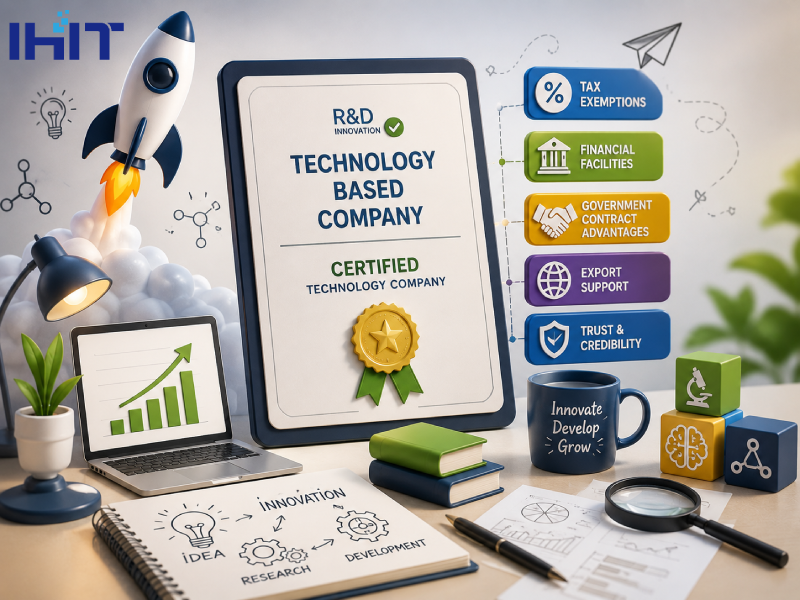
This certificate can make a significant difference for your business. Knowledge-based companies benefit not only from customs and tax exemptions but also receive priority when applying for bank loans and export financing facilities, gain advantages in government tenders, and demonstrate that their technology has been officially recognized at the national level. If you are planning to expand beyond the Iranian market, this certificate also signals to regional and international buyers that your company is credible and trustworthy. Many knowledge-based companies have successfully secured international partnerships thanks to this recognition. When entering cross-border agreements, using trade payment guarantee can also help minimize commercial risks.
Step 1: Is Our Product Truly Knowledge-Based?
Before taking any further steps, you should first determine whether your product or service meets the requirements for obtaining a Knowledge-Based License. Factors such as the level of innovation, the technologies involved, commercialization potential, research and development (R&D) activities, and the technological value added are among the key criteria considered during the initial evaluation. If your product satisfies these requirements, you can proceed with greater confidence to prepare your documents and submit your application.
Step 2: What Documents Are Required to Obtain a Knowledge-Based Certificate?
Preparing complete documentation is essential for obtaining a Knowledge-Based License. In most cases, you will need your company registration documents, audited financial statements, technical specifications of the product, supporting documents related to patents or scientific publications, and a business plan. If you have previously exported the product, it is recommended to include shipping documents, customs records, and letters from overseas buyers to demonstrate genuine market demand. At this stage, using consulting services can significantly improve the chances of your application being approved. Once your documents are ready, upload them to the relevant online system. The initial review generally takes two to three weeks. For official requirements and guidelines, refer to the Knowledge-Based Companies portal of Iran’s Vice Presidency for Science and Technology.
Step 3: Technical Evaluation and On-Site Inspection

An expert evaluation team will review your submitted documents and may also visit your office or R&D laboratory. During this stage, your production process, implementation methods, and even the qualifications of your technical team may be assessed. For this reason, any inconsistency between your documentation and actual operations can create issues. The technical evaluation typically takes four to six weeks, and if any revisions are required, you will be notified accordingly.
Step 4: What Happens After Your Knowledge-Based Certificate Is Approved?
Once the technical team approves your application, your file is forwarded to the final approval committee. If the previous stages have gone well, this step is usually straightforward. A digital Knowledge-Based Certificate is issued with a validity period of one to three years and must be renewed.
You will immediately gain access to tax incentives, including lower corporate taxes and VAT exemptions on exports. You can also benefit from special bank export financing facilities.
If you export to countries such as China, present your certificate to customs authorities or local partners. This may help reduce processing times and customs duties.
Step 5: How Can You Use a Knowledge-Based Certificate to Strengthen Exports?
Obtaining a Knowledge-Based License is only the beginning. After receiving it, you enter a new stage of faster business growth. Update your marketing efforts and reach out to international buyers. The government supports certified exporters through export insurance, subsidized shipping, and assistance with trade fair participation. There are also special programs for trade between Iran and other countries, including China, that help make border procedures faster and less expensive. Prepare a clear export plan.
Common Mistakes When Applying for a Knowledge-Based Certificate
One common mistake is applying for a Knowledge-Based Certificate before the product is truly ready. If the product has not yet reached an acceptable level of technical development, documentation, or innovation, the application is more likely to be rejected. Another common mistake is submitting incomplete or unclear documents. The evaluation committee reviews technical documentation, research and development records, financial statements, and real evidence of the company’s capabilities, not just general descriptions.
Another major mistake is hiding debts, legal issues, or weaknesses in research and development. Transparency is essential at this stage because any inconsistency can make the review process more difficult. Another common mistake is forgetting to renew the certificate after receiving it, since all of its benefits expire with it. In reality, the certificate has the greatest value when it is used to support business growth, product development, and expansion into new markets.
Final Thoughts
The process usually takes around three to six months from application to receiving the Knowledge-Based Certificate, depending on the company’s preparedness and the complexity of the knowledge-based product. The certificate provides tax incentives, access to substantial funding, and easier entry into international markets. For Iranian companies with global export goals, it is more than just a certificate—it is a strategic tool that creates real business opportunities.
If you are planning to obtain a Knowledge-Based License or expand the export of your technology-based products, proper planning and professional consulting can reduce both the time and cost of the process.
Frequently Asked Questions (FAQs)
The process usually takes between three and six months, depending on the completeness of your documents, the evaluation process, and the complexity of your product.
Yes. Startups can apply if their products or services meet the required innovation and technology criteria.
A Knowledge-Based Certificate is typically valid for one to three years and must be renewed before it expires.
The certificate offers tax incentives, customs exemptions, easier access to export financing, and greater credibility in domestic and international markets.
Yes. If the company no longer meets the eligibility requirements or fails to renew the certificate, its approval may expire or be revoked.
Yes. It can improve your credibility with international buyers, provide access to government export support programs, and simplify certain export procedures.
Not necessarily. While patents can strengthen an application, eligibility is primarily based on the product’s level of innovation, technology, and commercialization potential.
Yes. A company may apply for more than one product, provided that each product independently meets the evaluation criteria.