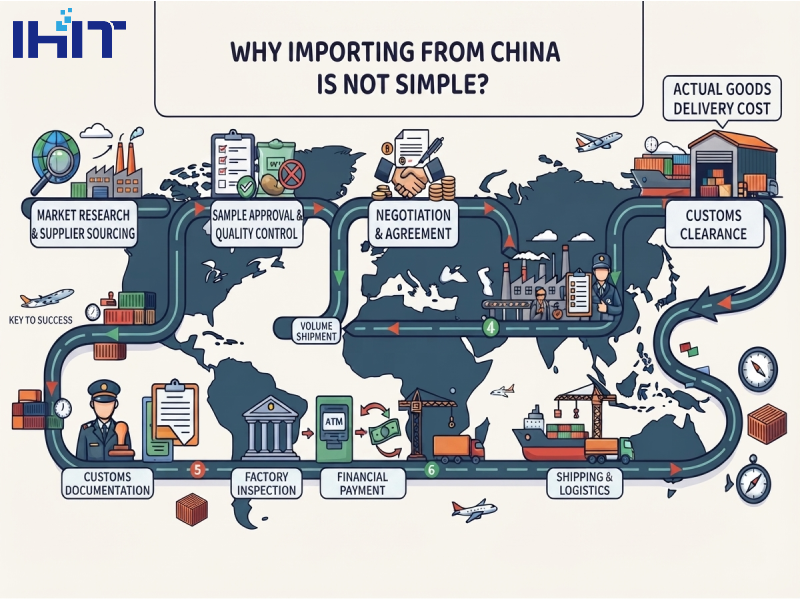
At first glance, importing goods from China may seem straightforward. However, choosing a supplier, negotiating the price, ensuring quality, managing lead times, and securing the transaction can each involve complex decisions. iHiT’s experience in the Chinese market shows that many problems with importing from China arise before the goods even reach customs, starting with supplier selection and the way the transaction is structured.
In this article, we explore why importing goods from China is more complex than it may seem, which risks are often overlooked, and how to assess importing goods from China more realistically before making a payment or placing an order.
What Does Importing from China Involve?
Importing involves more than buying a product; it includes supplier evaluation, negotiation, sampling, payment, production, inspection, shipping, documentation, and customs clearance.
One of the problems with importing from China is focusing only on price. A cheaper supplier may cost more due to inconsistent quality, long Lead Time, or unfavorable payment terms.
Before ordering, answer three questions:
- What exactly do I need?
- What should I look for in a supplier?
- What is the actual cost of delivering the goods?
Answering these questions can help prevent rushed decisions.
How Do You Choose the Right Supplier in China?
Why Is Choosing a Supplier About More Than Finding the Lowest Price?
The key question when evaluating a supplier is not how much they are charging today. It is whether they can deliver your fifth and tenth orders with the same level of quality. To answer that, look at several factors: their actual production capacity relative to your order volume, their track record of exporting to similar markets, consistency in quality across different orders, and whether they actually own the factory or outsource production to another facility. Without these factors, a low price is just a number.
Verifying the company’s official identity and properly comparing supplier quotations are separate issues, covered in detail in 7 Common Mistakes in Trading with China That Can Cost You. For now, the important point is that these checks should be completed before placing an order—not after the payment has been made.
If you do not have the time or expertise to assess a supplier’s production capacity, export track record, and certifications, Business Consulting Services can help speed up the evaluation process and identify potential risks before they become costly problems.
Is Direct Importing Better Than Using a Local Partner?
Direct importing can make sense for experienced businesses that have the resources to manage suppliers, documentation, and logistics. However, for first-time orders, having a local partner can reduce the time, errors, and transaction risks involved.
To reduce the risk of buying from China, work through the process step by step: define your requirements, evaluate the supplier, review samples, finalize the financial and contractual terms, and conduct pre-shipment inspection.
For local presence, a shared office in China can be useful, while commercial transaction guarantee services can help reduce financial risk. Best Online Marketplaces in China can also be useful for understanding available sourcing channels.
Why Can the Final Product Differ from the Sample?
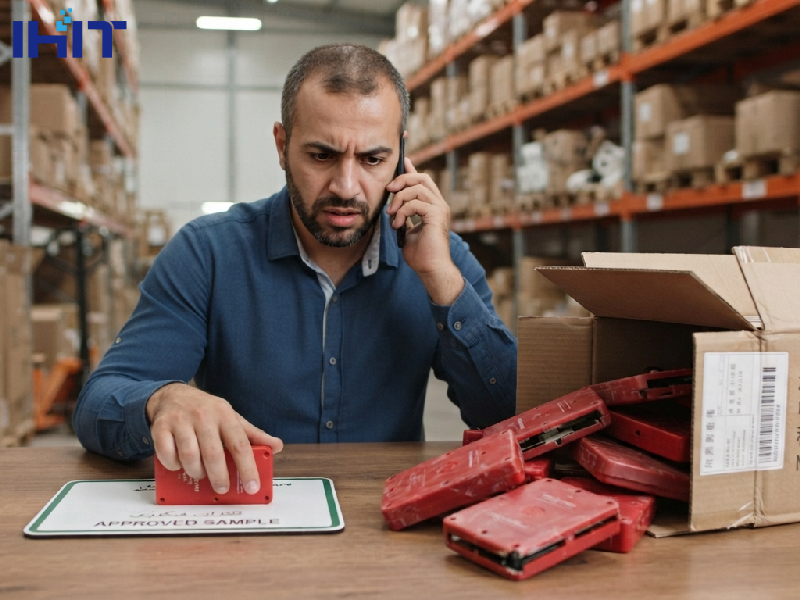
The sample you approved only proves that the factory can produce the product. It does not mean the entire order will come off the production line to the same standard. Changes in materials, production batches, or components often go unnoticed until the shipment arrives—when the payment has already been made and the goods are far from the factory. At that point, negotiating becomes much harder because the seller holds most of the leverage.
To avoid getting into this situation, ask for photos and videos of the approved sample from the start. For sensitive or high-value orders, make sure the goods are inspected before they are shipped.
Why Isn’t the Purchase Price the Real Import Cost?
A competitive price and reliable supplier are not enough. Payment terms, timing, currency, documents, refund conditions, and the payment route under sanctions all affect transaction risk.
One of the problems with importing from China is discussing payment only after choosing the product and supplier, even when the deal may be commercially attractive but difficult to settle safely.
To reduce the risk of buying from China, define the advance payment, settlement terms, required documents, final payment conditions, and both parties’ responsibilities from the start.
Why Is Paying a Chinese Supplier Risky?
The factory price is only part of the final cost. Packaging, inspection, shipping, customs, clearance, and warehousing can significantly increase the cost of importing goods from China.
The risk of buying from China also includes underestimating these costs. Calculate the total landed cost and consider both optimistic and conservative scenarios before deciding.
Which Importing-from-China Mistakes Create the Highest Costs?
Many problems with importing from China result from seemingly small decisions:
- Placing an order without precise specifications
- Choosing a supplier based solely on price
- Making payments too quickly
- Ignoring production lead times
- Overlooking additional costs
- Placing an order without checking licenses, standards, and labeling requirements
To reduce the risk of buying from China, document product specifications, delivery terms, production time, payment terms, and acceptance criteria before payment. Also assess how delays, defective goods, or higher shipping costs could affect the deal’s profitability.
Conclusion
Reliable management of importing goods from China begins with recognizing that it is not a simple purchase, but a chain of interconnected decisions involving supplier selection, sample approval, payment terms, total landed cost, quality control, and shipping.